
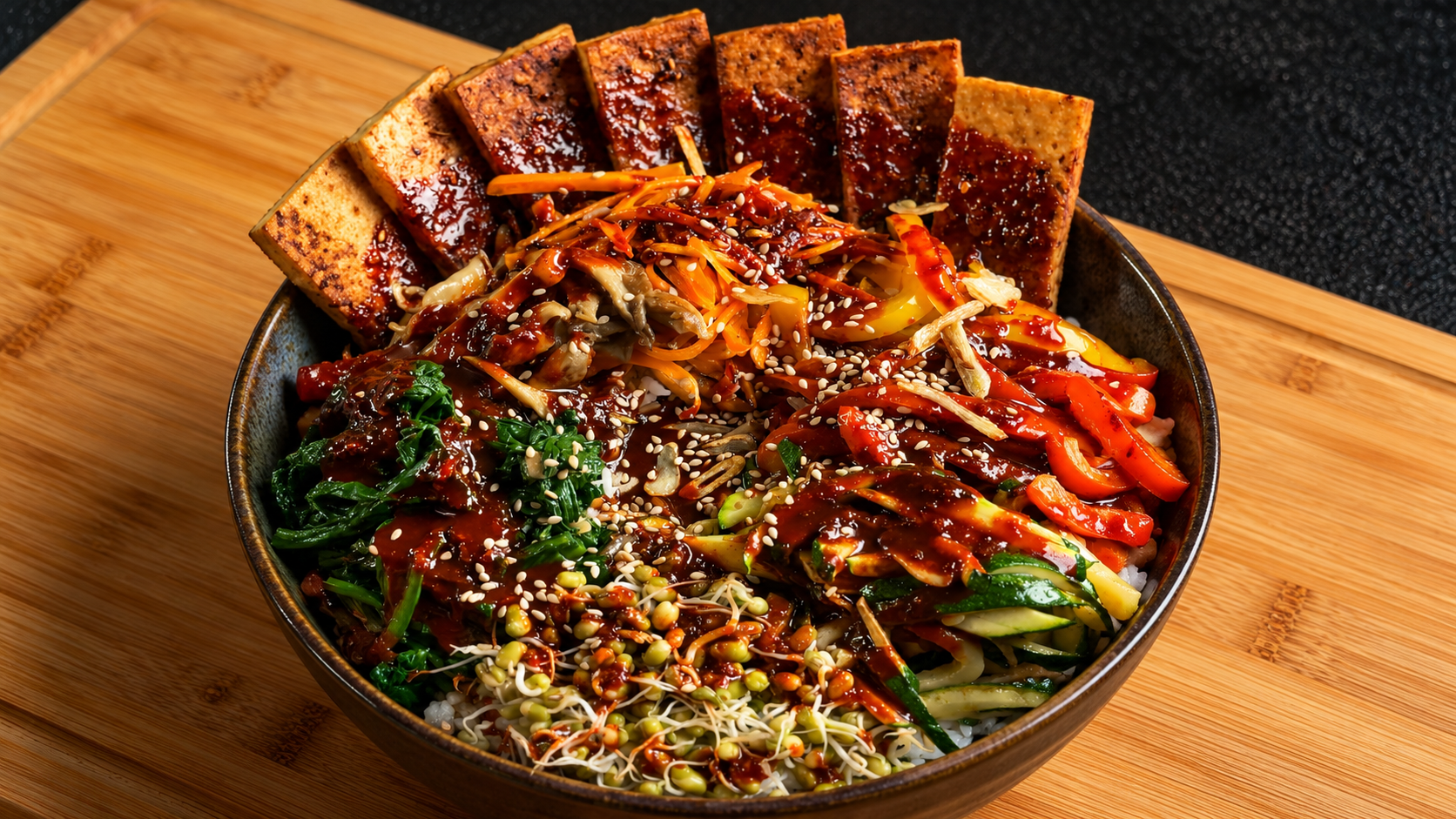
Gochujang Bibimbap
A vibrant Korean rice bowl where colorful, individually seared vegetables, golden tofu and warm rice come together with a sweet, spicy and savory gochujang sauce. Bibimbap is all about contrast — in color, texture and flavor — with every ingredient finding its place in one beautifully balanced bowl.
Ingredients
- For the Rice and Vegetables
- 2 cups cooked short-grain rice, preferably warm
- 1 medium carrot, julienned
- 2 cups fresh spinach, washed and drained
- 1 small zucchini, halved lengthwise and sliced
- 1 cup mung bean sprouts
- ½ yellow capsicum, thinly sliced
- ½ red capsicum, thinly sliced
- 150 g oyster mushrooms, sliced
- 200 g firm tofu, cut into rectangular slices
- 3–4 garlic cloves, thinly sliced
- 2–3 tbsp neutral cooking oil, as needed
- 1 tbsp soy sauce, for the spinach and tofu
- Salt, to taste
- For the Gochujang Sauce
- 2 tbsp Kitchen Secrets Gochujang
- 1 tbsp mirin
- 1 tbsp soy sauce
- 1 tbsp toasted sesame oil
- 1 tbsp honey
- 1 tsp freshly grated ginger
- 1 tsp freshly grated garlic
- 1 tsp rice wine vinegar, if using the substitute for mirin
- 1 tsp sugar, if using the vinegar substitute
- 1–2 tbsp water, to adjust consistency if needed
Method
- Cook the rice
- Wash the rice until the water runs relatively clear. Cook according to the rice variety’s instructions until tender. Keep warm and set aside.
- Prepare the gochujang sauce
- In a small bowl, combine the Kitchen Secrets Gochujang, mirin, soy sauce, sesame oil, honey, grated ginger and grated garlic.
- Whisk until smooth. Add a little water if the sauce is too thick to drizzle. Taste and adjust the sweetness, acidity and heat to your preference. Set aside.
- Prepare the garlic garnish
- Heat a small amount of oil in a pan over medium-low heat. Add the thinly sliced garlic and cook gently until lightly golden and crisp, taking care not to burn it. Remove and drain on a paper towel.
- Reserve some of the garlic-infused oil for the vegetables if desired.
- Sear the vegetables separately
- The key to this bowl is cooking each vegetable individually. This preserves its colour, texture and distinct flavour.
- Carrots: Heat a little oil in a pan. Add the julienned carrots and a pinch of salt. Toss over medium-high heat for 2–3 minutes, until slightly softened but still retaining some bite. Remove and set aside.
- Spinach: Heat a little oil and briefly sauté a few slices of garlic. Add the washed spinach, a small splash of soy sauce and a pinch of salt. Toss until just wilted, then remove from the pan.
- Zucchini: Add a little oil to the hot pan. Stir-fry the sliced zucchini for 2–3 minutes until lightly browned and tender while retaining its shape.
- Oyster mushrooms: Sear the mushrooms over medium-high heat with a little oil. Let them release their moisture and cook until softened and lightly browned. Avoid overcrowding the pan.
- Capsicum: Sear the yellow and red capsicum separately or together for 1–2 minutes, just until slightly softened while remaining crisp.
- Bean sprouts: Bring a small pot of water to a boil. Add the sprouts and blanch for approximately 1–2 minutes. Drain thoroughly and set aside.
- Keep each prepared vegetable separate for assembly.
- Sear the tofu
- Pat the tofu dry to remove excess moisture. Heat a little oil in a pan and place the slices in a single layer. Sear on both sides until golden.
- Add approximately 1 tbsp soy sauce and toss or turn the tofu briefly to coat. Allow the excess moisture to evaporate, then remove from the pan.
- Assemble the bibimbap
- Divide the warm rice between two bowls.
- Arrange the carrots, spinach, zucchini, capsicum, oyster mushrooms and bean sprouts in separate sections over the rice. Place the golden tofu alongside the vegetables.
- Drizzle the gochujang sauce over the bowl, then finish with the crisp garlic slices, toasted sesame seeds and a little sesame oil if desired.
- Serve immediately. Mix everything together just before eating so the rice, vegetables, tofu and sauce combine into one balanced mouthful..
Chef Aryamaan’s Notes
- Don’t overcook the vegetables. The carrots and zucchini should retain a little bite, while the spinach should be wilted rather than waterlogged.
- Give the mushrooms room. Overcrowding causes them to steam instead of sear. Cook in batches if necessary.
- Balance your gochujang. Korean fermented chilli paste brings heat, sweetness and savoury depth. Since brands vary in saltiness and spice, taste the sauce before serving and adjust with water, honey or a little vinegar.
- Keep the rice warm. It provides a soft, neutral base for the more intensely flavoured toppings.
- For a more indulgent finish, press the rice into a lightly oiled hot cast-iron pan before adding the toppings. Let the base crisp gently for a few minutes, creating a variation inspired by dolsot bibimbap, the Korean hot-stone-bowl style.